
The product
The HyKro heat battery: thermal storage up to 500 °C
A solid-state thermal battery (magnetite, an iron ore) that turns renewable electricity into industrial heat up to 500 °C. Simple in design, modular and with no changes to your production hall.
| Storage capacity | 8 MWhper module |
|---|---|
| Maximum temperature | 500 °Cmagnetite storage medium |
| Electrical charging power | 600 kWper module, full in about 13 hours |
| Heat output | 200 kWper module, up to about 40 hours of heat |
| Heat loss | 0.5–1 % per daythanks to vacuum insulation |
| Round-trip efficiency | > 90 %depending on the application |
| Storage vessel dimensions | Ø 3.5 × 9 minstalled outdoors along the facade |
| Weight | ± 100 tper module, filled |
| Connection | Steam, thermal oil or watervia a single heat exchanger |
| Minimum process temperature | > 120 °Cprocess heat at the customer site |
Vessel in vessel in vessel: the design
At the heart of the heat battery is a cylindrical storage vessel made of three nested vessels.
- Inner vessel: the heat store. Filled with magnetite, an iron ore with a high heat storage density and good thermal conductivity. A set of heating coils is built into the vessel. They convert the electricity into heat in a controlled way, which the magnetite absorbs and holds, up to 500 °C. Thanks to its good conductivity, the heat spreads quickly through the core.
- Middle vessel: the air circuit. Air flows between the inner and middle vessel along the ribbed steel wall. The air heats up and carries the heat to the heat exchanger.
- Outer vessel: the vacuum insulation. The space between the middle and outer vessel is evacuated. There is no better insulator than a vacuum, which keeps heat loss to 0.5 to 1% per day.
How it works, step by step
From empty store to fully discharged: the seven states of one charge and discharge cycle.
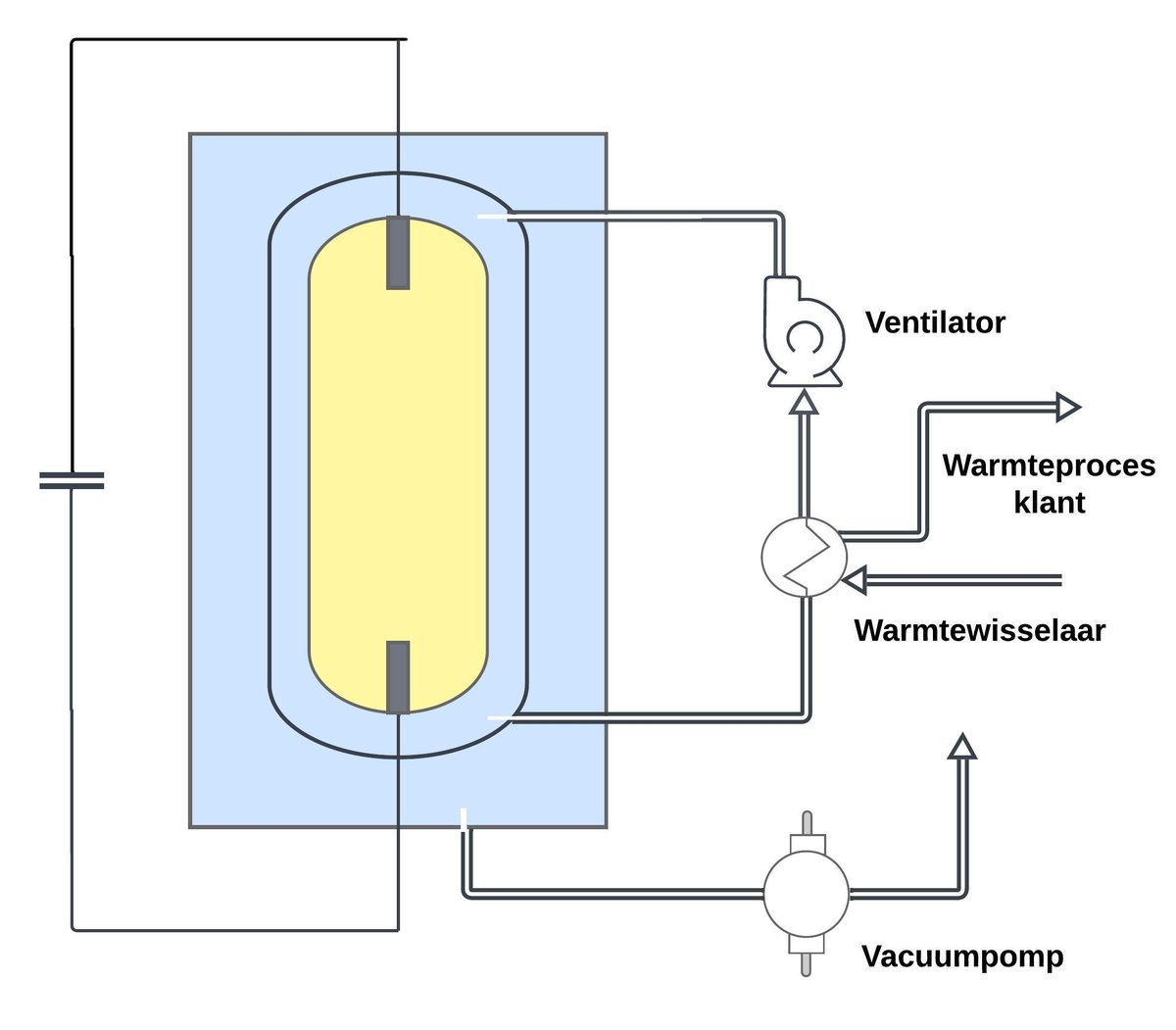
1Initial state: the inner vessel is filled with magnetite, with the heating coils built in. 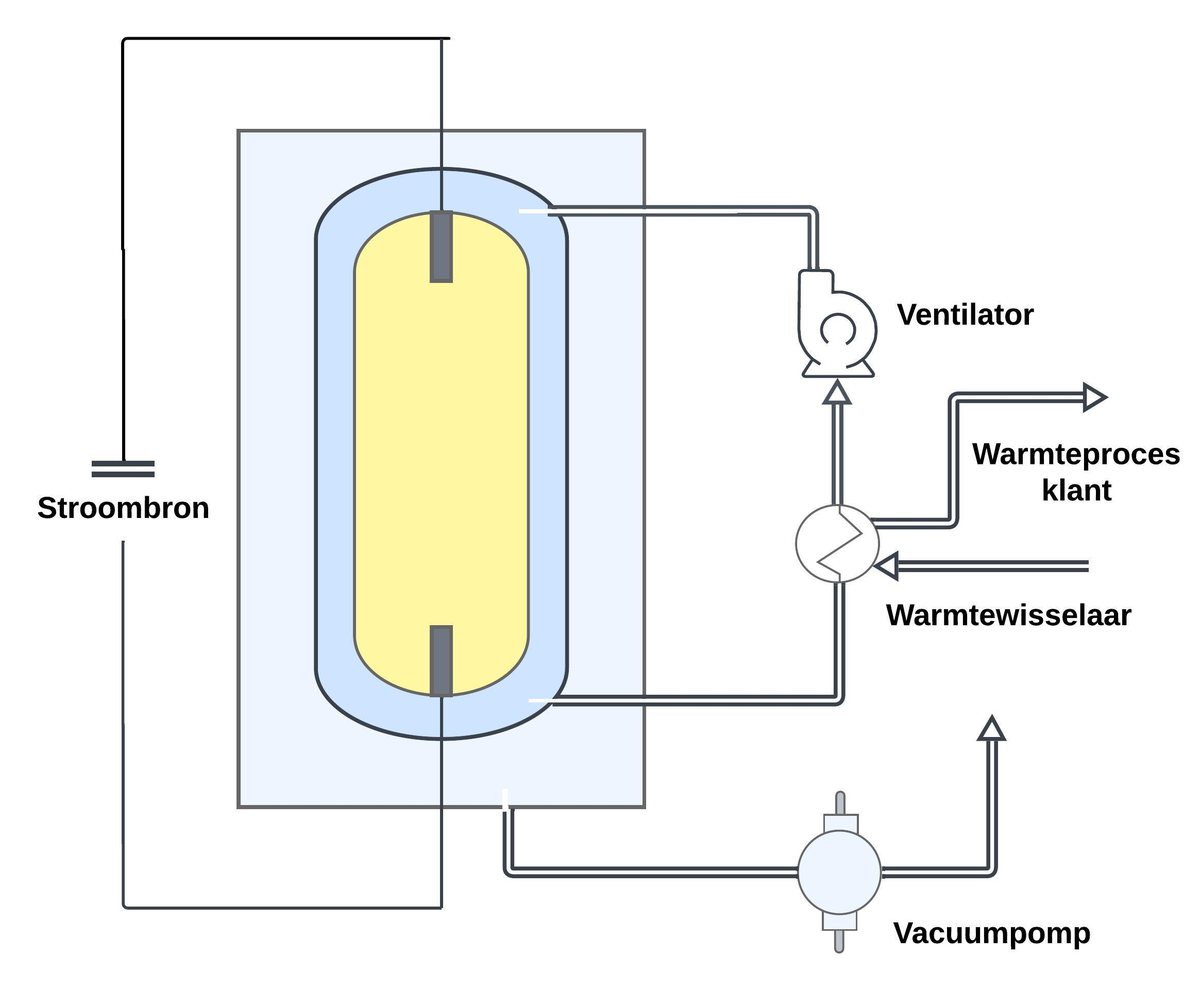
2The vacuum pump evacuates the space between the middle and outer vessel. The insulation is active. 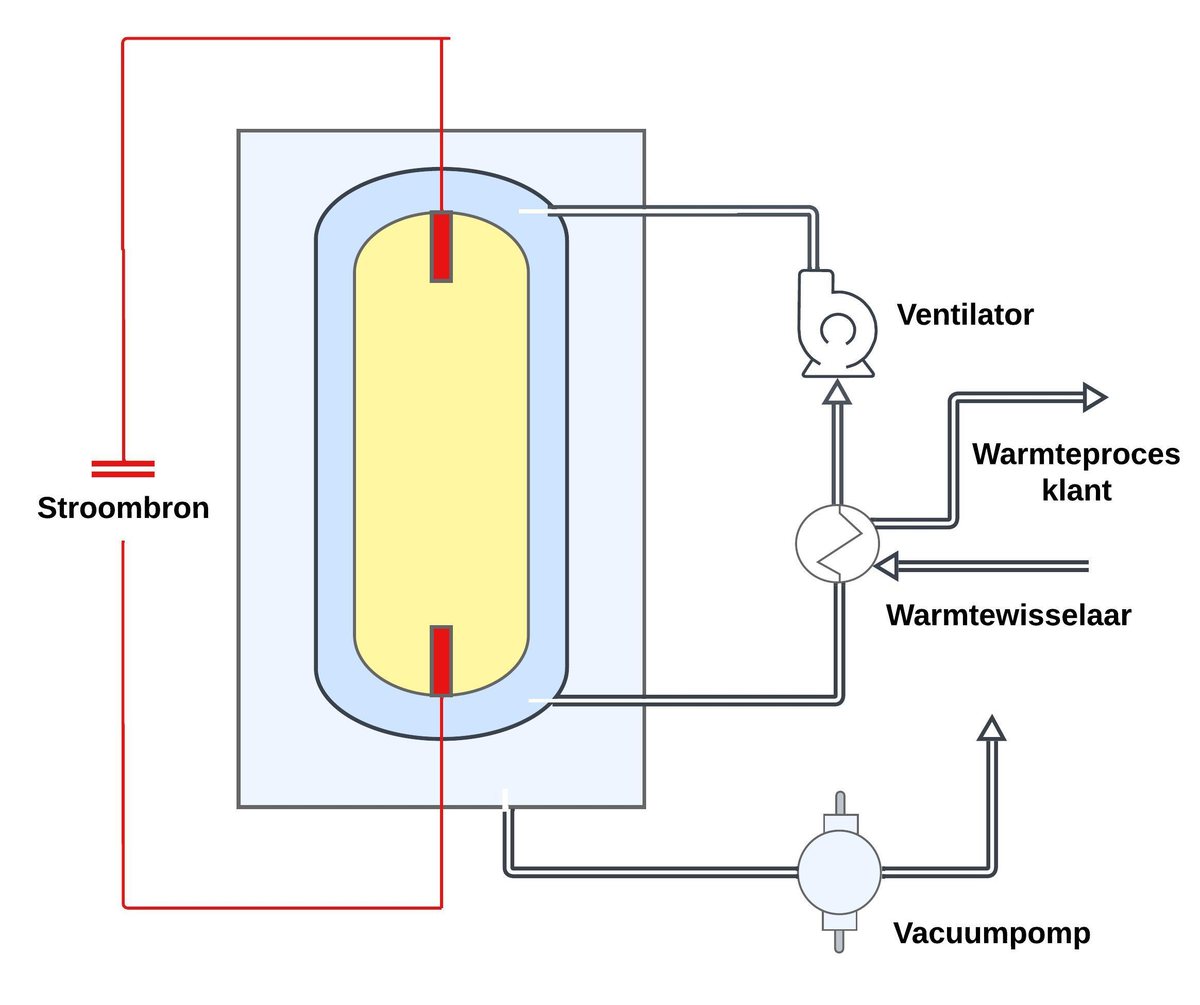
3Charging starts: the heating coils convert electricity into heat, which the magnetite absorbs. 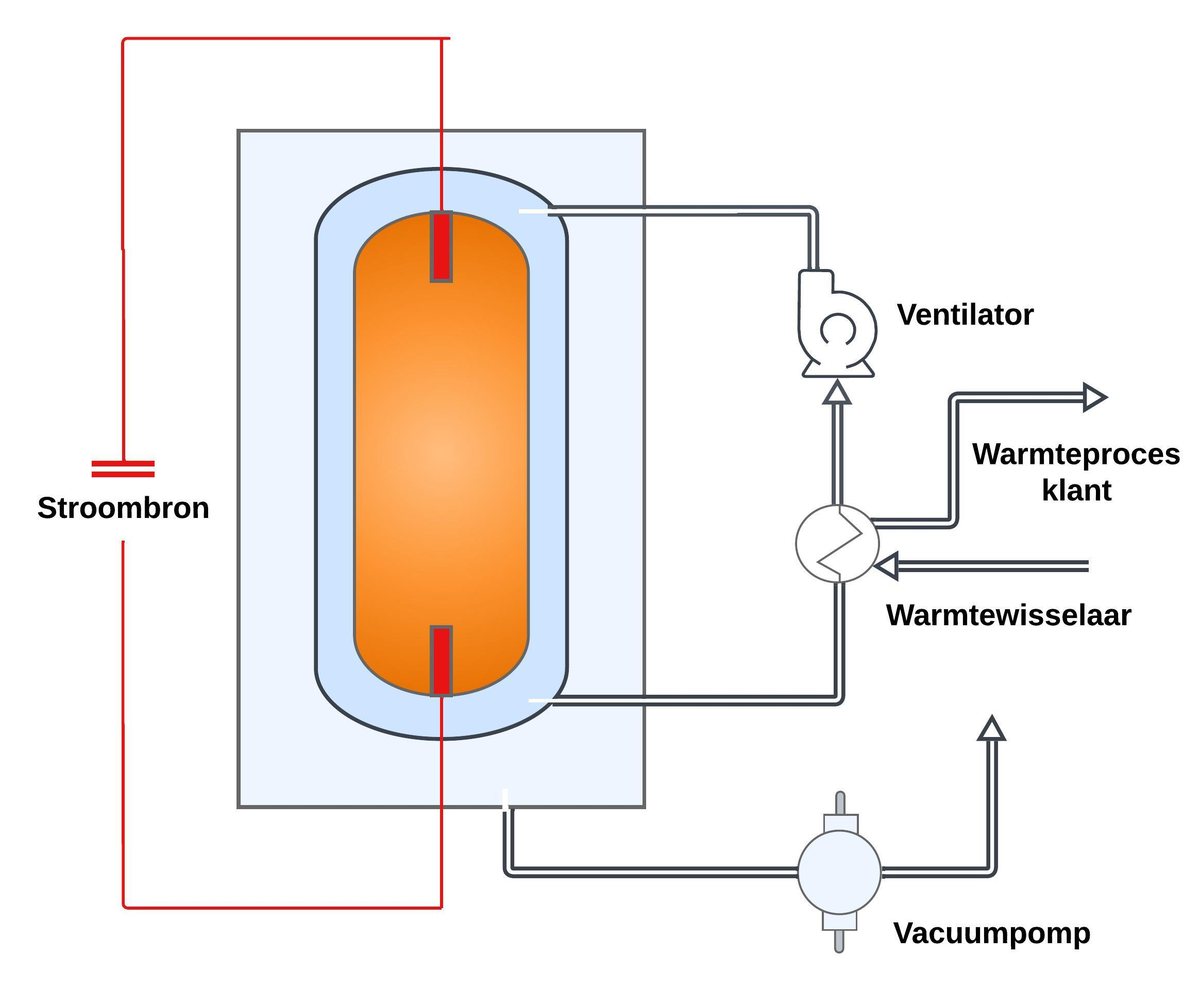
4The core heats up. The vacuum insulation keeps the heat inside the vessel. 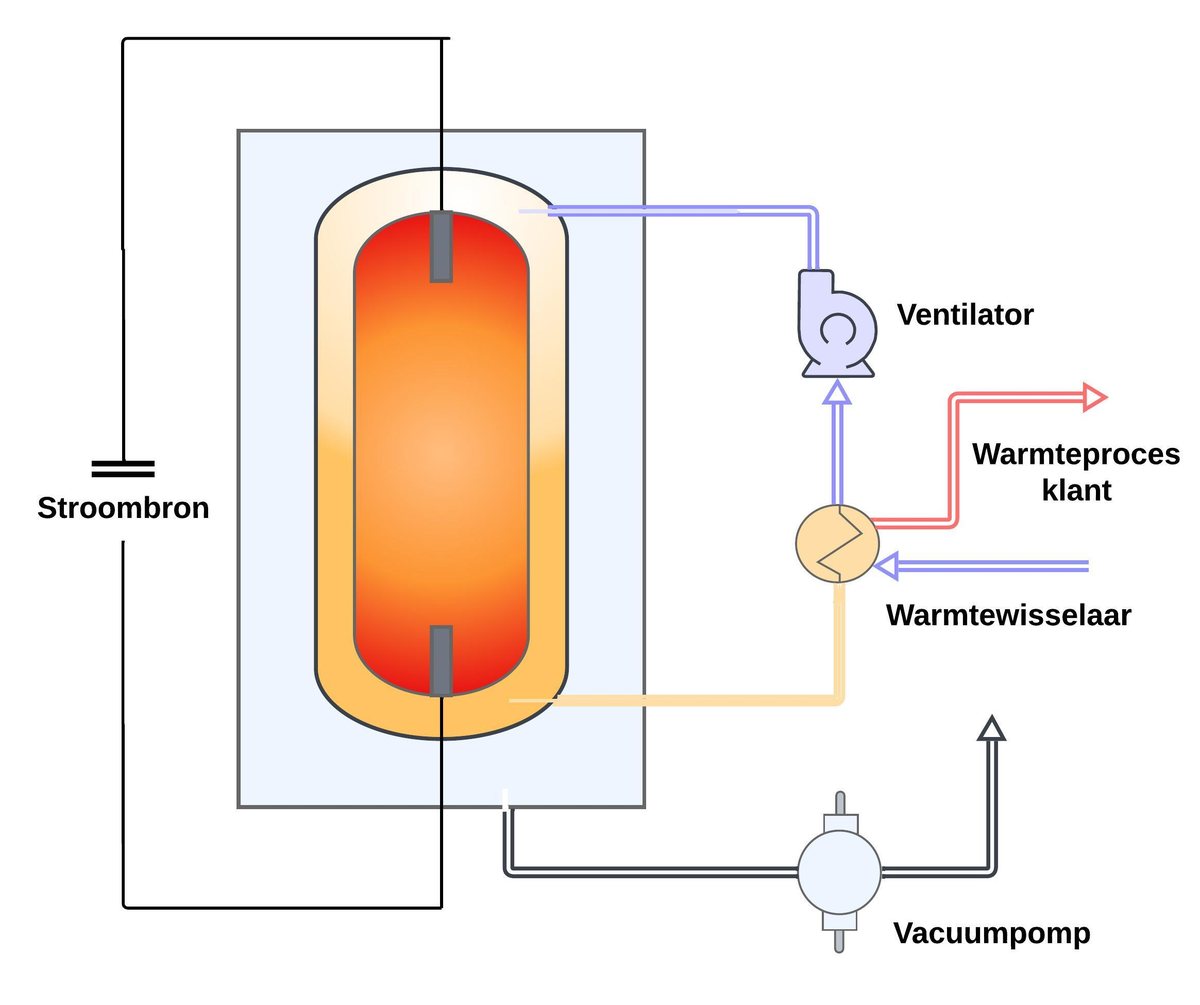
5At a maximum of 500 °C, charging stops. The battery can now deliver heat. 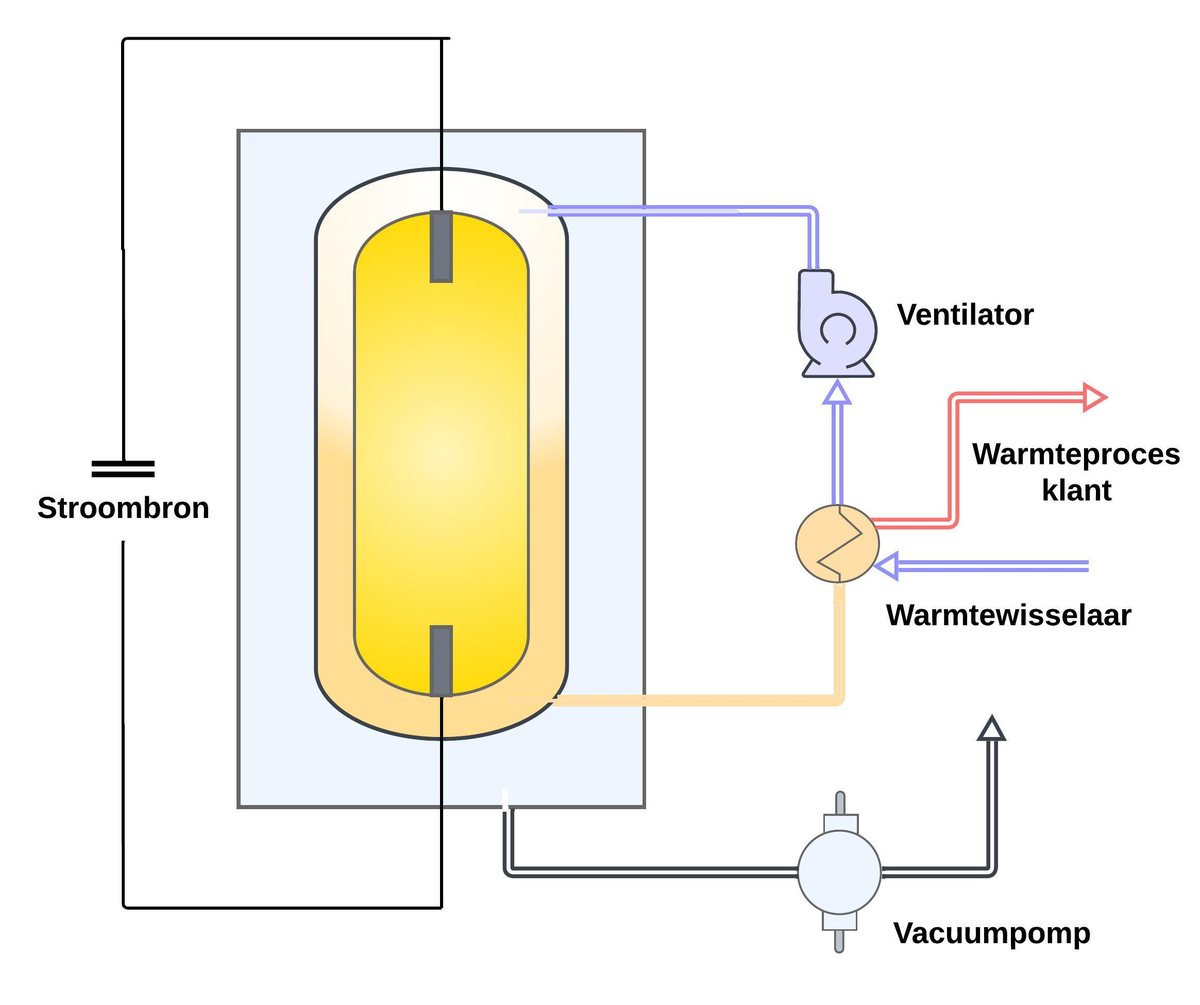
6Delivering heat: the fan sends air along the hot vessel to the heat exchanger. The core temperature drops. 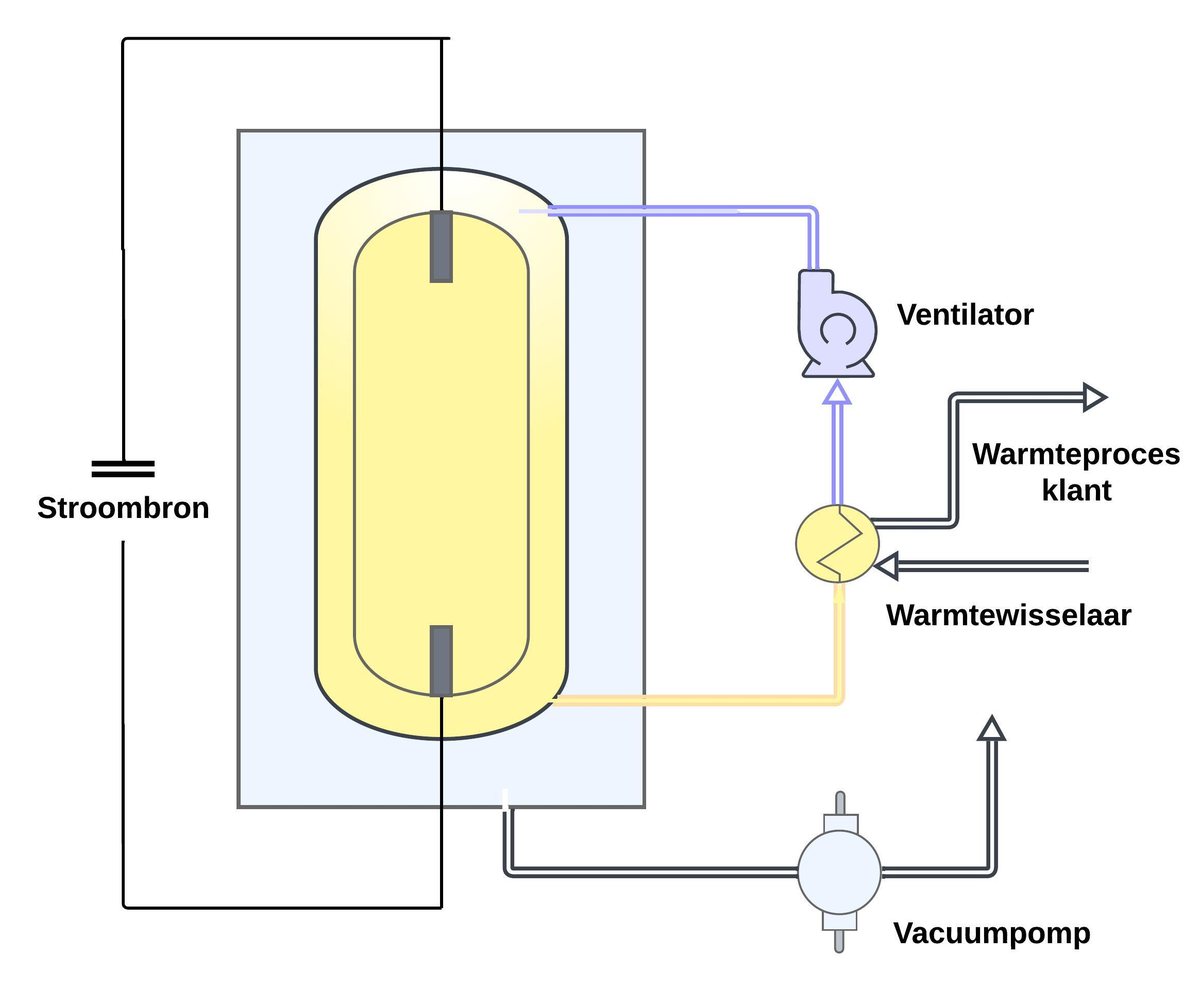
7At the minimum temperature, delivery stops. The battery is ready to charge again.


Energy unit and connection
Next to the vessel sits the energy unit with a shell-and-tube heat exchanger, a variable-speed fan, the vacuum pump and all sensors. Through the heat exchanger, the hot air transfers its heat to your process medium: steam, thermal oil or a water loop.
The fan controls the air flow and therefore the output, so your process receives a constant output of up to 200 kW per module.

Controlled by price and demand
An internet-connected PLC controls charging and discharging. It retrieves EPEX spot prices and can follow your own generation or the available grid capacity. HyKro monitors the installation remotely.
Installed outdoors along the facade
The storage vessel is 3.5 metres in diameter, 9 metres high and weighs about 100 tonnes when filled. It stands outdoors along the factory wall on a foundation. No extra building is needed and nothing changes inside the hall.
The vessels are assembled on site as a kit and filled in stages. Need more capacity? Each module runs independently with its own controller and can be linked to further modules.

Built for a long service life
The heat battery has no moving parts in the storage vessel, just magnetite that heats up and cools down and the heating coils that heat it. The moving parts (fan and vacuum pump) are standard industrial components that are easy to maintain.

Heat battery, thermal battery or sand battery?
This technology goes by several names. Heat battery, thermal battery and thermal energy storage mean essentially the same thing: electricity is converted into heat and stored until you need it. Unlike a lithium-ion battery, a heat battery does not give back electricity but heat, which is exactly what an industrial process needs.
A sand battery is a heat battery that uses sand as its storage medium. The HyKro heat battery belongs to that family, but uses magnetite instead of sand. Magnetite is an iron ore with a higher heat storage density than sand, so the same volume holds more heat. It also conducts heat well, so the heat from the built-in heating coils spreads quickly through the whole core and comes out again quickly when discharging.
How does a heat battery compare with an e-boiler or an industrial heat pump? Read the comparison of e-boiler, heat pump and heat battery.
Want to know what this means for your process?
The heat battery quick scan shows how many modules you need, what the connection looks like and what the business case is.